Another re-run due very little time. This is a little more about my family history and the "Hunger Winter" in Holland (1944-45.)
The "war" in the Netherlands lasted only three days- they capitulated on 10 May 1940. They then endured five years of Nazi occupation. My father was born in 1932 in Utrecht, which is geographicaly the center of the Netherlands. He spent the war years in Bilthoven, which is about 4 miles east of Utrecht. Bilthoven is next to the airport at Soesterberg, which the Germans used as a weapon depot. Consequently, the Allies strafed the town regularly. My dad showed me the bullet wounds on the trees when we went back in 2001. He remembers that there were never any windows in his house because of the constant bombings.
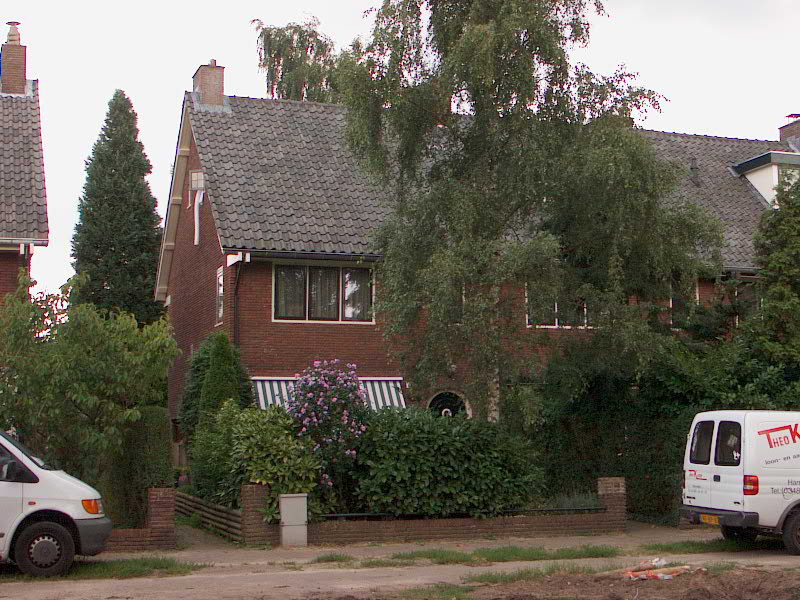
My mother was born in 1936 in Den Haag (The Hague.) She spent the war years in Ede, which is east of Bilthoven. Her father, grandmother and grandfather all died in her house during the war. She remembers that a Jewish family down the street was sent off to the concentration camps, and the neighbors were asked to keep their furniture for when they came back- they never came back. The house was still there when I went back in 2001. Her mother was forced to house German POWs during the war. My mother remembers having to walk for miles to beg for food for the family.
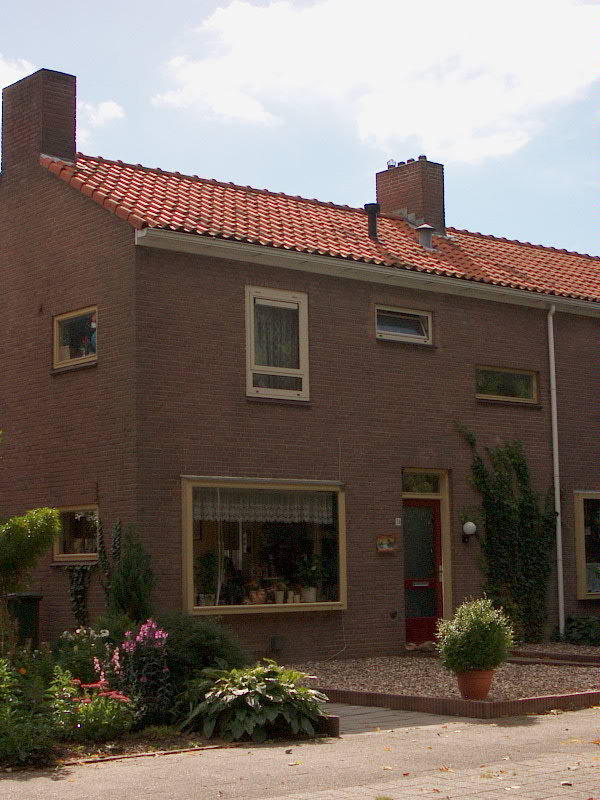
In September 1944, there was an Allied plan to move north into Holland to end the war quickly. "Operation Marketgarden" (A Bridge Too Far) failed miserably, and so Holland had to wait for 8 more months to be liberated. During this last winter, the weather was very cold and there was no food. Over 16,000 people starved to death during this time. The Germans made a virtual wall around Northern and central Holland and no food or other humanitarian aid could enter. My father had to eat his pet crow and tulip bulbs, among other things. The house he lived in (pictured) had no windows because the Allies strafed the town almost every day. My father never knew if he would be alive for another day. Finally, when it was obvious that Germany was going to lose the war, a tentative agreement was reached that Allied planes could come and drop food over pre-determined sites to help the people.
The operation was called "Operation Chowhound" for the Americans and "Operation Manna" for the British. The planes (B-17's and Lancasters) were in instructed to fly between 300-400 feet over the drop sites. Even before the papers were signed, planes began the food drops. The Germans had anti-aircraft weapons in case the Allied were going to bomb instead of drop food. Although the food drops were maybe too late to prevent much of the starvation, they did wonders for the morale of the people. The Canadians were then able to liberate Holland on the fifth of May 1945. My mother remembers riding on the Canadian tanks when they liberated Ede. There is still avery special bond between the Dutch and their liberators. After the war, the restoration of Holland was very diffiicult. Most of the infrastructure was completely destroyed. A new government was set up (Socialist) and a new economy was established. The rebuilding was slow and hard. Much farmland had been destroyed, and housing was at a premium for many years.
Since this is a long post, I will continue the story later. Please let me know if you find this interesting!
Labels: Dutch History, Family History, Hunger Winter, the Netherlands